



 Pristupačnost

Jan Biering (VLB Berlin, Germany)
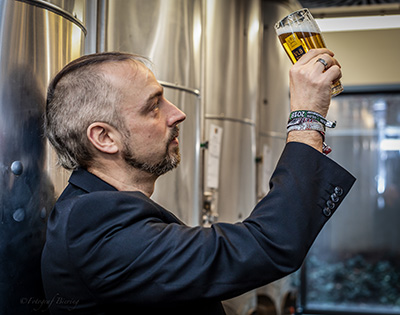
Jan Biering is currently Head of Research Institute for Beer and Beverage Production (FIBGP) and consultant. Since 2021, he is responsible for the Research Institute for Beer and Beverage Production, including consultancy in breweries worldwide with a focus on technological issues, recipe development and troubleshooting, and microbiological issues. He is also involved in education and training for different courses at the VLB that includes the craft brewing course to the certified brewmaster course. Earlier he was the plant manager at the Schwarzbacher brewery, Schlossbrauerei Schwarzbach from 2003-2011 and was responsible for beer production from raw material intake till final filled product filling in bottles and kegs. Responsibilities included brew house work, fermentation, and filtration. His field of activity included Quality management, consumer relations and production of alcohol-free beverages.
Jan graduated from Technical University of Berlin (TU Berlin) with an engineering degree in biotechnology, specializing in brewing (1997-2003). He has also done an apprenticeship as brewer and maltster (1995- 1997) at Kulmbacher Brauereien, Kulmbach, Germany.
TOPIC OF THE LECTURE
"Yeast Propagation in Modern Breweries: Innovations and Global Practices"
Jan Biering, Head of the Research Institute for Beer and Beverage Production, will present an insightful update on yeast propagation processes in breweries. This presentation will delve into the latest advancements in yeast propagation, highlighting the critical role it plays in beer production. Jan Biering will explore various propagation regimes established in breweries worldwide, providing a comprehensive overview of the techniques and technologies employed to optimize yeast health and performance. Attendees will gain valuable insights into the practical applications of these regimes, understanding how different approaches can impact the quality and consistency of beer. This presentation promises to be an essential resource for small and big brewers seeking to enhance their yeast management practices and stay abreast of global trends in the industry.
Gert De Rouck (KU Leuven, Belgium)
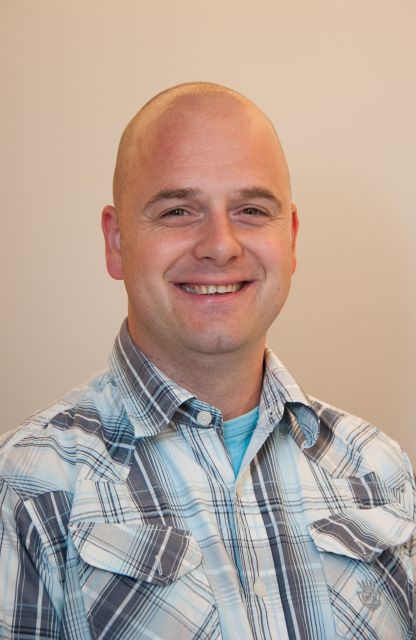
Gert De Rouck: Born in 1974. Studies: Academic degree in Industrial Engineering – Biochemistry at KaHo St.-Lieven, Gent, Belgium (1996). PhD in bioscience engineering at KU Leuven (2013): System changes in wort production for the improvement of the flavour stability of lager beer. Appointments: 1996-1997: production engineer at lambic brewery De Troch. 1997-1999: R&D assistant at KaHo St.-Lieven. 1999-2001: Product development at the “proef”brewery. 2001 – 2015: Master brewer of pilot brewery (2-5 hl) KU Leuven - Gent. 2015 – present: Manager of pilot facilities Malting and Brewing Technology (EFBT). Courses (theory and practice) in malting and brewing technology and biochemical engineering techniques. Research topics: wort production, flavour stability, mixed fermentations, high tech hopping, botanicals and wood barrel ageing. (Co)-author of 77 peer reviewed journal articles, 6 PhD theses, 1 book chapter, 18 conference proceedings, 81 presentations. 2020 – 2025: Chairman of the Brewing Science Group of EBC.
TOPIC OF THE LECTURE
"Adapted fermentation for non-alcoholic and low-alcohol beers"
More non-alcoholic beers are available on the market these days. In this lecture, we start with an overview of several production techniques, but the focus will be on the use of non-maltose-fermenting yeasts. Glucose will be converted into alcohol, while maltose remains in the final beer. To limit alcohol formation and residual sweetness, a low original gravity of around 8°P is recommended. The result of this process is a very watery final product. Can we adapt the mashing process in order to limit the glucose and maltose levels, which also depends on the brewing equipment?
Aleksander Poreda (Krakow School of Brewing, Poland)
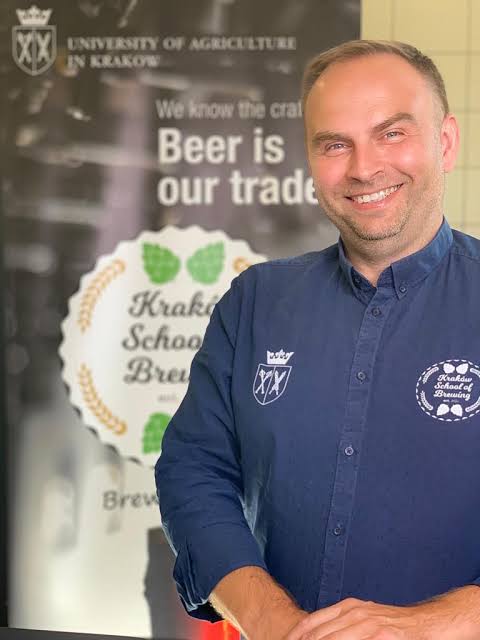
Prof. Aleksander Poreda defended doctoral disertation "The influence of selected metal ions on the fermentation of beer wort" (2006) at the Agricultural University in Krakow, Poland, where he has been an associated professor since 2015. In 2016 his efforts led to the establishment of the Krakow School of Brewing which offers comprehensive education, research and analytical support for brewers in Poland. Training programs are offered at the university level (BSc., postgraduate and doctoral studies) and open courses. He was the coordinator of international doctoral studies in the field of malting and brewing, carried out as part of the European Joint Doctorate in Food Science project (financed by the Horizon 2020 program). He has authored many scientific publications, organizes an international brewers conference in Poland called School of Fermentation Technology.
TOPIC OF THE LECTURE
"Adapting water - perfect ionic composition: case study in yeast propagation from Bury brewery"
Water chemistry is one of the most powerful yet often underestimated tool available to brewers. This talk explores how to transform “raw” brewing water into style-appropriate, optimized water profiles that enhance flavor, balance, and consistency. Using practical case studies, I will demonstrate how different base waters can be adjusted to suit contrasting beer styles, from hop-forward ales to malt-driven lagers. The session focuses on practical decision-making rather than theory of water chemistry, highlighting common pitfalls and efficient adjustment strategies. Attendees will leave with a clear framework for turning any water source into “perfect water” for their target style.
Tuur Mertens (CraftSense, Belgium)
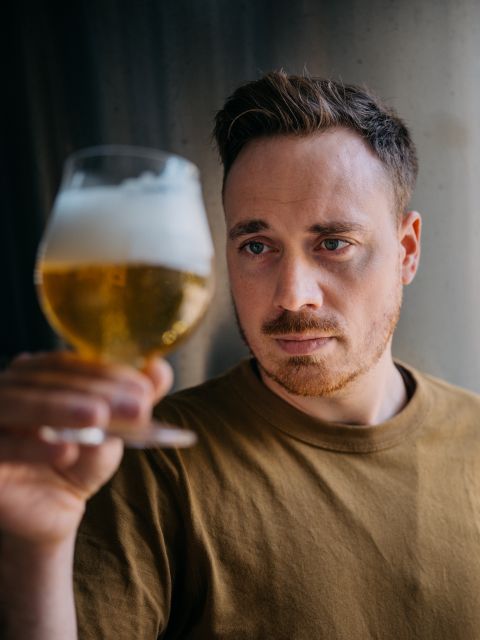
Dr. Tuur Mertens is a brewing scientist and the founder of CraftSense, a consultancy dedicated to helping breweries optimize quality and scale operations. He holds a joint PhD in Malting & Brewing Science from TU Berlin (Germany) and KU Leuven (Belgium). His doctoral research focused specifically on flavour stability and oxidative staling, leading to the development of MashLife, a natural antioxidant brewing aid now used commercially.
Tuur previously served as quality manager at Brewery Van Steenberge. Through CraftSense, he now specializes in solving complex technical challenges, implementing QA/QC systems and training sensory panels. He was recently awarded the FWO Scientific Award Puratos 2024 for his contributions to food science. His goal is to bring "science to the glass" in a way that is accessible and actionable for brewers of all sizes.
TOPIC OF THE LECTURE
"Freshness sells: Practical approaches to improve beer flavour stability"
For many brewers, freshness is becoming a key differentiator in a crowded market. Whether you are distributing across town or across continents, delivering beer that tastes as intended, even weeks after packaging, has a major impact on customer satisfaction and brand reputation. However, keeping beer fresh remains one of the most complex challenges in brewing.
In this talk, Dr. Tuur Mertens will take a practical look at how flavour stability affects beer quality and what brewers can do to extend shelf life. Drawing from both brewing science and real-world industry examples, the lecture will examine the "invisible enemies" of beer quality, specifically the role of oxygen, transition metals like iron and staling precursors. It will provide actionable strategies to reduce these risks in the brewhouse and offer critical insights into packaging and storage techniques to preserve flavour longer. The goal is to highlight simple, effective steps that breweries of all sizes can take to keep their beer fresher for longer.
Tin Kocijan (KU Leuven, Belgium)
_web.jpg)
Tin Kocijan is currently finishing his PhD at KU Leuven where he explores the microbial ecology of beer barrel ageing. More precisely, he is investigating how microbial communities are established during beer maturation in wood. Prior to his PhD studies, Tin completed his BSc in Biology at the University of Zagreb in Croatia and MSc in Molecular and Cellular Biology at Sorbonne University in Paris. In addition to PhD he also organises TinTalks, a series of science popularisation talks on fermentation science.
TOPIC OF THE LECTURE
"Does it matter who comes first? Exploring how microbial community is established in barrel-aged sour beers"
Sour beers obtained through maturation of conventionally fermented beers in wooden barrels are becoming increasingly popular in the (craft) beer community due to their noteworthy balance between sourness, aroma and flavour complexity. However, severe lack of predictability and control of the process often leads to inconsistent results that can lead to substantial financial losses. Recent studies suggest that barrels represent an important factor leading to batch-to-batch variation, particularly as the inner surfaces of barrels can be covered by a diverse microbial community that unfavourably affects the beer chemistry and sensory characteristics. However, the underlying mechanisms explaining how microbial communities are formed during barrel ageing and how this impacts the beer chemistry are still unclear. Here, we investigated how microbial community establishment and composition depend on the order of species arrival, a phenomenon known as priority effects, by using our recently developed MiniBarrel experimental ecosystem. Inoculation order of Acetobacter and Brettanomyces have a large influence on microbial community dynamics over 50 weeks during the process of wood maturation. Together with beer chemical profiles, the obtained results will inform the control strategy to steer microbial community composition and accomplish consistent production of the new generation of barrel-aged sour beers.
Krunoslav Kolar (Heineken, Croatia)
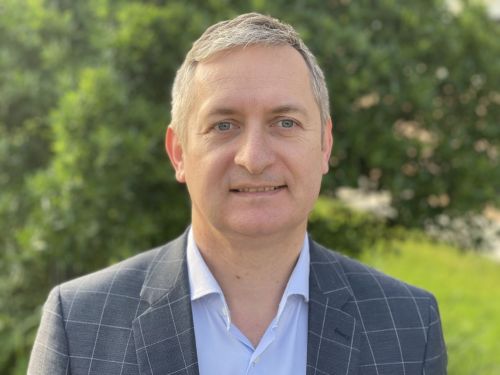
Krunoslav Kolar is an experienced business leader specializing in end-to-end supply chain operations, with over 20 years of success in improving manufacturing, engineering, quality assurance, and logistics within the FMCG sector at Heineken. The professional profile highlights expertise in change management, continuous improvement, and talent development to drive operational excellence and P&L improvements.
Extensive supply chain leadership: Currently serving as Supply Chain Manager at Heineken Hrvatska, overseeing supply chain activities, transformation projects, new product introductions, and sustainability initiatives.
Production excellence and TPM expertise: Held roles including Production Excellence Manager for Europe and TPM Regional Manager, leading production setup transformations, TPM program rollouts, leadership development, and benchmarking for energy and productivity savings.
Global packaging and maintenance leadership: Led global packaging line initiatives, process standard updates, capability development, and maintenance teams management, including complex technical projects such as line relocations and automation implementations.
Education and professional development: Holds a Master of Food Engineering from the University of Zagreb and has completed numerous trainings and certifications including ISO 9001 and 22000 quality systems, TPM leadership, project management, and business English.
TOPIC OF THE LECTURE
"Using TPM to drive excellence in Supply Chain operations"
TPM (Total Production Maintenance) in Supply Chain is a structured, end‑to‑end methodology focused on eliminating losses, standardizing work, and engaging all employees to improve safety, quality, service, and cost performance. It begins by building a common language and understanding of TPM fundamentals across all Supply Chain teams, ensuring that every employee knows how to identify waste & losses, apply problem‑solving methods, and follow stable standards.
Through active participation, TPM embeds continuous improvement into daily operations and strengthens process ownership—from office functions to logistics, production planning, warehousing, and transportation. It provides a framework to sustain high performance, linking activities to clear KPIs and the Driving System.
Core tools such as Waste & Loss analysis (Tim WOODS), Unified Problem Solving (UPS), and TPM Improvement Tools help teams systematically remove inefficiencies and stabilize workflows.
By integrating TPM across the entire Supply Chain—planning, procurement, brewing, packaging, warehousing, transport—organizations create predictable, reliable processes that reduce variability, minimize cost, elevate service levels, and unlock the full potential of their people.