



 Pristupačnost

This year we have prepared three very interesting practical workshops for you, led by some of the best experts in their fields. In order to conduct these practical workshops in the best possible quality and to give you the best chance to acquire new knowledge, the maximum number of participants in each workshop is limited (the number is specified for each individual workshop).
WORKSHOPS ARE NOT FREE OF CHARGE (the fee amounts are listed for each individual workshop):
WORKSHOP 1 - 30 EUR (includes the workshop and a certificate of participation)
WORKSHOP 2 - 30 EUR (includes the workshop and a certificate of participation)
WORKSHOP 3 - 150 EUR (includes the workshop, a meal during the workshop break, dinner at the Kostanjac tavern on Friday, March 27 and a certificate of participation) - THE WORKSHOP IS FULL AND REGISTRATION IS NO LONGER POSSIBLE
ALL THREE WORKSHOPS - 180 EUR (includes all three workshops, a meal during the workshop break on Saturday, dinner at the ˝Kostanjac˝ tavern on Friday, March 27 and certificates of participation) - WORKSHOP No 3 IS FULL AND REGISTRATION IS NO LONGER POSSIBLE FOR ALL THREE WORKSHOPS
DINNER ON THE DAY OF THE CONFERENCE - 20 EUR (includes dinner and a beer at the ˝Kostanjac˝ tavern on Friday, March 27)
If you book a place for ALL THREE WORKSHOPS, the total price is 180 EUR, which means you get one for free! This price also includes dinner at the ˝Kostanjac˝ tavern on Friday, 27 March, 2026.
If you don't plan to participate on workshop on Saturday, but would like to come to dinner and socialize at the ˝Kostanjac˝ tavern, the price is 20 EUR and includes food and beer (drinks at the bar are not included in the price). You can pay the aforementioned amount to the bank account number listed below.
After paying the registration fee to the bank account of the University of Applied Sciences in Karlovac HR3923400091110473181, please be sure to send a confirmation of payment to the following e-mail address: pivari@vuka.hr.
Please write the text below as a description of payment:
"Your name and surname - Workshop 1"
"Your name and surname - Workshop 2"
"Your name and surname - Workshop 3"
"Your name and surname - All three workshops"
"Your name and surname - Dinner"
You can register for the workshops and the conference via the following REGISTRATION LINK
The deadline for registering for the workshops is March, 6, 2026!
THURSDAY, March 26, 2026
14:00 − 16:00
WORKSHOP 1
New Trends in Malt and Beer Technology with Weyermann® Specialty Malts
PRICE: 30 EUR
Maximum number of participants: 25
Language: ENGLISH
Leader: Fedor Nikolashkin, Weyermann®, Germany
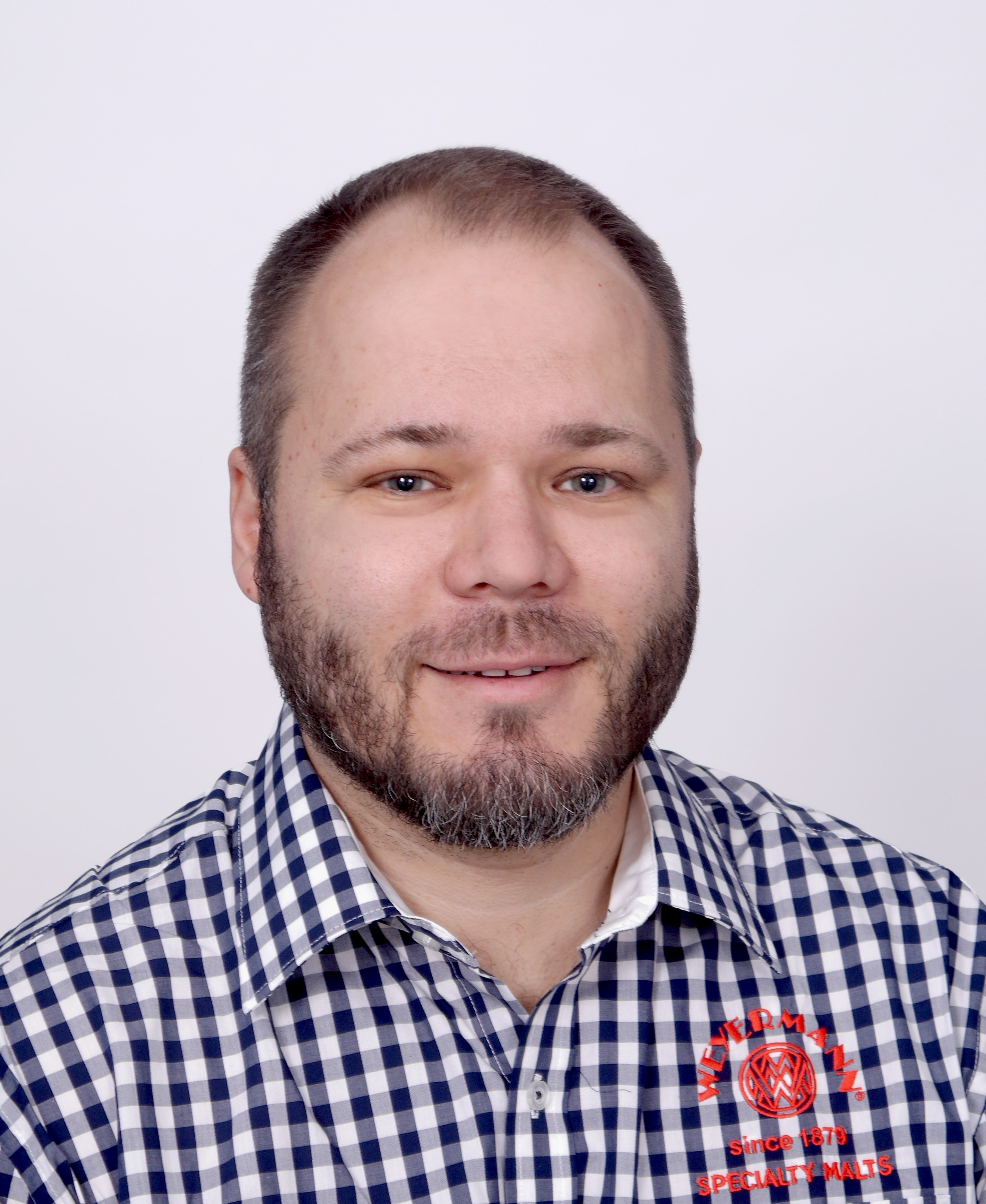
Fedor Nikolashkin is an International Malting and Brewing Expert at Weyermann®, bringing over 20 years of professional experience in the malting and brewing industry. He graduated as a Brewmaster from the Doemens Brewing Academy in Munich in 2004 and further enhanced his expertise by becoming a Certified Beer Sommelier through the same institution in 2015. Throughout his career, he has been deeply involved in the development and application of advanced brewing and malting techniques, contributing to the promotion of quality and innovation in the global brewing community.
WORKSHOP DESCRIPTION:
This practical workshop will provide participants with an in-depth overview of current developments and emerging trends in malting and their implications for contemporary brewing practices. Through guided malt and beer tastings, attendees will explore the sensory characteristics associated with various malt profiles and production techniques. The session will also include a structured discussion of selected beer recipes from the Weyermann® Pilot Brewery, emphasizing process optimization and the relationship between raw material selection and final product quality. Designed for professional brewers, the workshop aims to foster knowledge exchange and promote a deeper understanding of the technical and sensory dimensions of malt in brewing.
17:00 −20:00
WORKSHOP 2
The Importance of Sensory Analysis in Beer Quality Assessment
PRICE: 30 EUR
Maximum number of participants: 25
Language: ENGLISH/CROATIAN
Leader: Dr. Boris Gadžov, FlavorAktiV, UK.

Dr Boris Gadzov has been FlavorActiV Director of Global Sensory Management since 2009. Boris began as a Global Sensory Manager, professional trainer and adviser in brand equity, product quality, insight/innovation and taster management. Boris has visited over 450 plants in beverage and food sector, plus worked with more than 3500 clients in 90+ countries. His significant language skills have helped develop business overseas, and provide global beverage and multi-language support to FlavorActiV’s customers. Before Boris joined FlavorActiV he gained a PhD in Food Molecular Microbiology from the University of Vienna.
WORKSHOP DESCRIPTION:
The importance of sensory analysis in beer quality assessment will be explored in this practical workshop through real-case examples and expert insights. Participants will be introduced to the key steps of sensory methodology, including standardized techniques for evaluating flavour, aroma, and mouthfeel. A guided tasting of beers with different desirable and undesirable flavour attributes will be conducted, and the origins of these attributes – such as those arising from yeast, hops, malt, or microbial contamination – will be explained together with the typical process conditions in which they are formed. Emphasis will be placed on how this knowledge can be applied in everyday brewery quality control to ensure consistently high product quality, with practical tools presented that can be implemented directly in professional brewing practice.
SATURDAY, March 28, 2026
10:00 − 16:00
WORKSHOP 3 - THE WORKSHOP IS FULL AND REGISTRATION IS NO LONGER POSSIBLE
Microbiological quality control - Microbial Mastery: Elevate Your Brewing Game
PRICE: 150 EUR (price includes a meal during the workshop break and dinner at the ˝Kostanjac˝ tavern on Friday, March 27)
Maximum number of participants: 10
Language: ENGLISH
Leader: Jan Biering, Dipl. ing., VLB Berlin, Germany
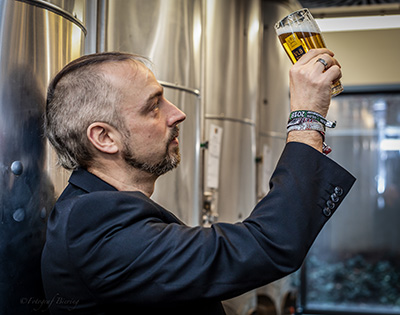
Jan Biering is currently Head of Research Institute for Beer and Beverage Production (FIBGP) and consultant. Since 2021, he is responsible for the Research Institute for Beer and Beverage Production, including consultancy in breweries worldwide with a focus ion technological issues, recipe development and troubleshooting, and microbiological issues. He is also involved in education and training for different courses at the VLB that includes the craft brewing course to the certified brewmaster course. From 2003-2011 he was the plant manager at the Schwarzbacher brewery, Schlossbrauerei where he was responsible for beer production from raw material intake to final product. Responsibilities included brew house work, fermentation, and filtration. His field of activity included Quality management, consumer relations and production of alcohol-free beverages. Jan graduated from Technical University of Berlin (TU Berlin) with an engineering degree in biotechnology specializing in brewing. He has also done an apprenticeship as brewer and maltster (1995- 1997) at Kulmbacher Brauereien, Kulmbach, Germany.
WORKSHOP DESCRIPTION:
Microbiological monitoring is a critical tool for ensuring beer quality and production safety. The presence and behavior of microorganisms, especially possible contaminations throughout the brewing process can significantly influence product flavor, taste and stability as well as consumer acceptance. Effective microbiological control helps prevent contamination, maintain consistency, and safeguard shelf life.
The foundation of a robust microbiological quality program is well-trained personnel who can detect changes and potential risks at every stage of production. This course will provide an overview of microbiological quality control with a detailed presentation on the fundamentals of microbial management, focusing on:
-
General aspects of brewery microbiology
-
Microbiological sampling
-
Detection and identification of beer-spoiling microorganisms
-
Microbiological monitoring throughout the brewing process
-
Hygiene and sanitation strategies for breweries
-
Best practices for maintaining product stability and safety
Schedule
10:00 – 11:00 - Introduction and General aspects of brewery microbiology
11:00 – 12:00 - Microbiological sampling in theory and practice
12:00 – 13:00 - Meal break
13:00 – 14:00 - Detection and identification of beer-spoiling microorganisms in theory and practice
14:00 – 15:00 - Hygiene and sanitation strategies for breweries and best practices in breweries
15:00 – 16:00 - final discussion and Q&A